Meriva Impact · Henry Tse
I help organisations see why their products, solutions and research aren't reaching a market — and what to do about it.
Henry Tse MEng(Hons) CEng FIET — Non-Executive Director and independent adviser.
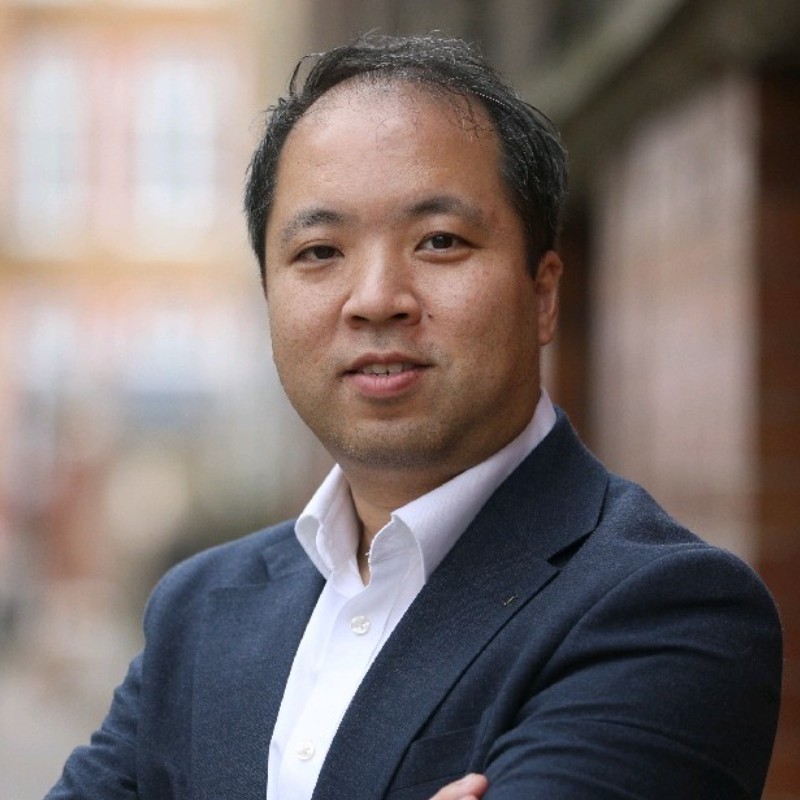
Henry Tse MEng(Hons) CEng FIET — Non-Executive Director and independent adviser.
Strong technology rarely fails on the technology. It stalls on the operating logic around it. If one of these reads like your situation, that's usually the call to make.
Feasibility is settled. The science works. But there's no validated buyer, no clear use case that addresses a real problem — and it stays in the lab, proving itself to itself.
It was meant to be a product. Then the scope narrowed to one customer's needs, scalability quietly disappeared, and the funding requests never stop. It looks like a product on the org chart and behaves like a project everywhere else.
Once successful, now managed reactively — funded for one-off fixes, never reinvested in. Revenue goes straight to margin while the product is starved of the work that would keep it competitive. It declines slowly enough that no one calls it.
I do this work two ways. The eye is the same. The chair is different.
The eye that earns its place at a board table is the same one that earns its place in a strategy review: judgement built across delivery, policy and research, applied to questions that sit between the silos.
When the question needs asking at the right level. The board questions I most often help with sit in the seams between strategy, risk and route-to-market — where the answer needs someone who has delivered at scale, worked the policy and ecosystem, and engaged the research side from inside.
Is this technology ready to be a product? Does the investment case rest on a route to market that holds up? Are the governance and adoption risks understood, or assumed? The same eye I'd bring to a stuck product — applied before the board commits.
At BAE Systems I chaired assurance reviews across the business — in Digital Intelligence, Submarines and Defence Information — on projects from modest budgets to multi-million-pound programmes, through technical, programme and investment lenses. On a board, that's the same discipline: testing whether a plan holds before it's approved, not after.
When a team needs the diagnosis rather than a board seat. I look at where a product, programme or research effort is stuck, and I tell you what I see and what I'd do about it.
The work is the judgement, not the delivery. Your team does the fixing.
At BAE Systems I chaired assurance reviews across three parts of the business — Digital Intelligence, Submarines and Defence Information — on work ranging from modest budgets to multi-million-pound programmes. The job was to test, before a decision was committed, whether the team had calibrated risk, cost, plan and route to market correctly — through a technical, a programme or an investment lens depending on what the gate demanded. It is the same discipline a board needs: structured challenge applied before approval, not after.
Aviation needed to reach net zero, but no one could say what the airport infrastructure to support it would actually require — so the research stayed abstract and the market stayed unformed. At Connected Places Catapult I shaped the UK's first Zero Emission Flight Infrastructure programme around that gap, and the demand modelling produced a figure people could plan against: long-haul airports driving roughly 1.8 million kilograms of liquid hydrogen per airport per day by 2050. That turned a feasibility question into a market that infrastructure, energy and technology providers could begin building toward.
A product had started as something to build once and sell many times, then quietly bent itself around a single customer's requirements until it was a bespoke project wearing a product's name — and still drawing product funding. I took it back to the question it had skipped: what is the standard offer, and who beyond this one customer needs it? Rescoping it against that, and reusing capability that already existed elsewhere in the business, took roughly £2M of avoidable build out of the plan and gave it a route to more than one buyer.
A complex technology business had accumulated more than a hundred products and services, many of them mature, most run reactively — funded to fix what customers complained about, rarely reinvested in. I consolidated them into six coherent portfolios and put the governance around them to manage each as a product with a lifecycle, not a cost centre slowly being run down. The point wasn't tidiness; it was making it possible to see which products were worth backing, which were quietly declining, and where the next investment should actually go.